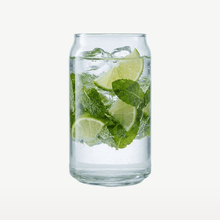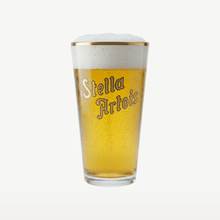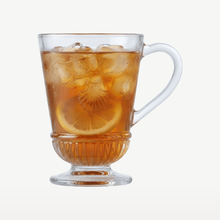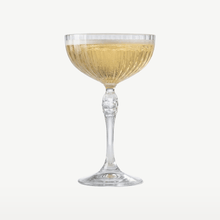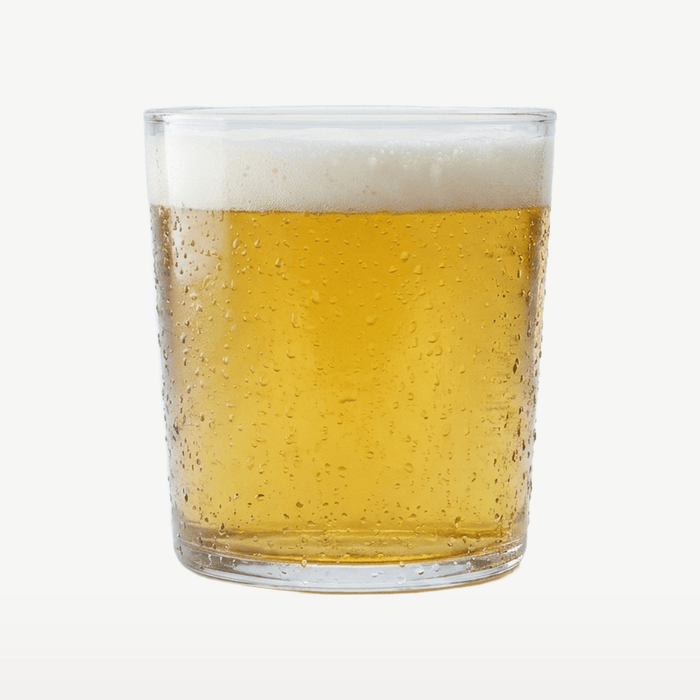
Bormioli Rocco Bodega Beer Glass 35 Cl - 12 Pieces
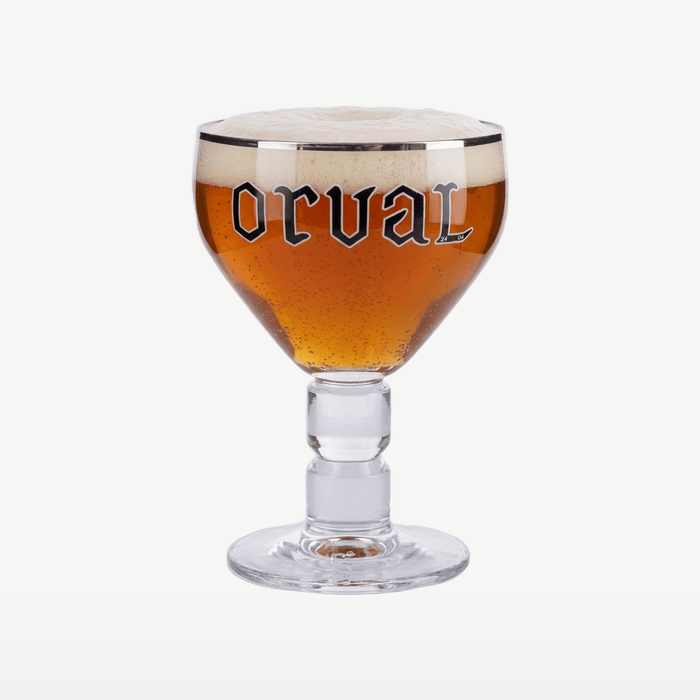
Orval Beer Glass 33 Cl - Gift Box
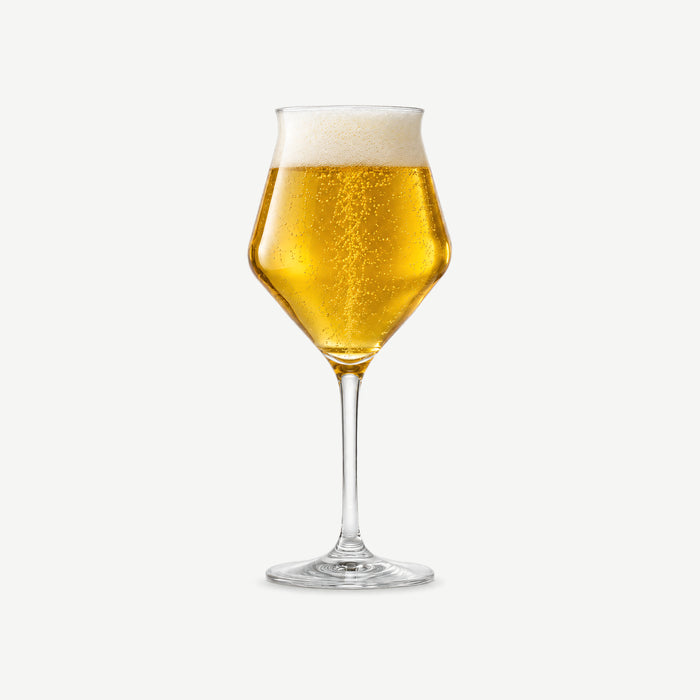
Lehmann Craft Beer Glass 44 Cl - 6 Pieces
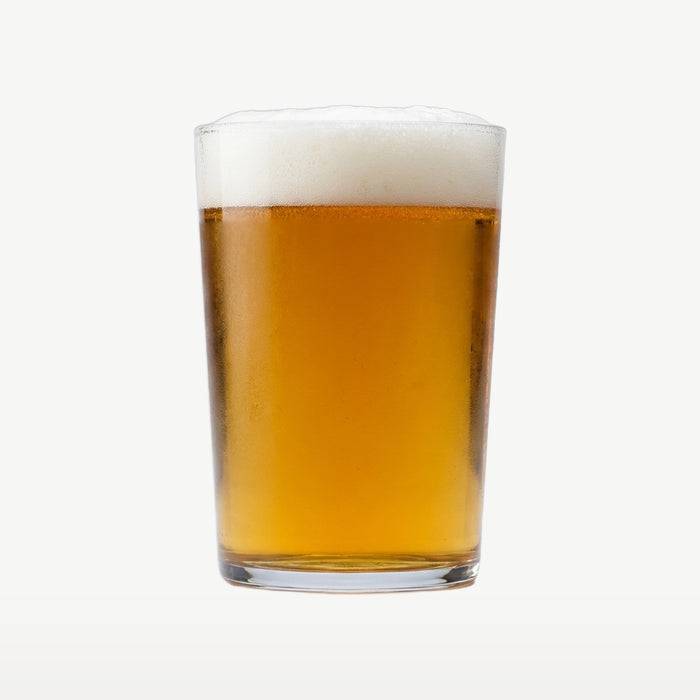
Bormioli Rocco Bodega Beer Glass 50 Cl - 12 Pieces

How to Pour
a Pilsner in
Rinse the glass with cold water and leave it wet. The head stays noticeably better on a wet, cool glass. Grease or soap residue makes the foam collapse immediately. So don't dry the glass with a tea towel.
Hold the glass at an angle under the tap or bottle, about forty-five degrees, and pour against the inside. Keep pouring in one go, because every pause creates coarser foam. The bottle or tap does not touch the rim of the glass.
When the glass is about two-thirds full, set it upright and pour the rest into the middle of the beer. This builds the head. Two fingers, about two centimeters, is what Dutch bars are used to.
For a flat rim, skim the head with a slotted spoon. If you leave it as is, it will spill slightly over the rim. Then wipe the outside of the glass. Serve pilsner at 4 to 6 degrees.
What did you think of this guide?
One click on a star is all it takes. If you’d like to add a comment, we’ll review it before it appears here.
Save this page
Email this page to yourself, so you have the instructions handy when it’s time to pour. You’ll also get a € 5 discount code on orders over € 50, for the matching glasses.
The story
Pilsner takes its name from Plzeň, called Pilsen in German, a city in Bohemia in what is now the Czech Republic. The first clear, golden, bottom-fermented beer was brewed there in 1842. It was later named Pilsner Urquell, literally the original source of pilsner. Beer was usually dark and cloudy at the time, so such a clear, light beer stood out immediately. It helped that glass was becoming cheaper and more common. Germany adopted the style, followed by the Netherlands and the rest of the world. Today, pilsner is the most widely consumed beer style in the world. And if you ask for a beer here, you’ll simply get a pilsner.
The right glass
Pilsner belongs in a narrow, straight glass that keeps it cold and holds the head. In the Netherlands, beer glass sizes have their own names. The flute is slender, around 19 centiliters, for a small pilsner. The vase is slightly tapered and holds around 29 to 34 centiliters, the standard glass in a traditional Dutch pub. Both are narrow, so less beer comes into contact with air. Larger, tapered styles, such as the Willi Becher, are in the beer glasses collection. Mugs with handles can be found in the beer mugs collection.

Mammoet Budgetline Flute Beer Glass 19 cl (12 pieces)

Mammoet Budgetline Amsterdam Beer Glass / Vase 34 cl (12 pieces)
Both sets together € 53,90.
The right tools
With a pilsner, you don't need much besides the glass: a jigger to measure the genever precisely for a kopstoot and a bar spoon to stir a radler. These are the bar tools we use ourselves; find them all in our bar tools & cocktail sets.


Glass set (our choice 01) + 2 bar tools together € 48,85.
What do you serve alongside it?
The pilsner itself takes center stage. Here's what else is served alongside it in the Netherlands. A small glass of genever makes it a kopstoot (a beer-and-genever pairing), and vieux and beerenburg are in the same category. Each drinks page tells you the alcohol percentage, what it tastes like, which cocktails it goes with, and which glass you need.


Variations & twists
German pilsner is usually the driest and most bitter. You can clearly taste the hops in the finish, and the head is firm. Czech pilsner, the style from Plzeň, is fuller and rounder from the malt and less bitter. Dutch pilsner usually sits between the two and is milder than both. Less bitter, lighter-bodied, made to be drunk cold and from larger glasses. So the same word on the label doesn't mean it's the same beer. Want to read more? See all drinks and brands.
Serving tip
Serve lager at 4 to 6 degrees. Below four degrees, you won't smell anything. Above six, the head collapses faster. Rinse the glass with cold water before pouring and leave it wet. That matters more for the head than how quickly you pour.
Good to know
Why is pils clear and golden blond?
There are two reasons. The malt is lightly dried and hardly roasted, so the grain gives off little color. And the bottom-fermenting yeast sinks to the bottom after fermentation. The beer is then cold-stored and filtered, causing proteins and yeast residues to settle. What remains is clear, golden-blond beer.
Where does the bitterness come from?
It comes from the hops. During the boiling of the wort, the alpha acids in the hop cones change into a form that dissolves in water, which creates the bitterness. Hops added late in the boil or afterward contribute mainly aroma and little bitterness. The bitterness of a pils is expressed in IBU. German pils usually has a higher IBU than Dutch pils.
Difference between a vaasje and a fluitje
The fluitje is the slender glass of around 19 centiliters that you see in many Dutch cafés. A small pils, finished before it gets lukewarm. The vaasje is the standard glass with a slight waist. It usually holds 25 centiliters of beer in a glass that holds 29 to 34 centiliters, leaving room for the head. So a fluitje isn’t a small vaasje; it’s a size of its own. That smaller capacity is exactly the point.
Why the head has to be just right
With pils, you can measure the head. Two fingers, about two centimeters, is customary in the Netherlands. If there is too much or too little foam, a glass is sent back at a café. There’s a practical reason for that, too. The foam holds in carbonation and aroma and forms a layer between the beer and the air. It also reveals a dirty glass. If there’s grease on it, the head immediately collapses, no matter how well you pour.
How much alcohol is in pils?
Pils is roughly between 4.5 and 5.5 percent alcohol. The exact percentage is shown on the label or tap list. Alcohol-free and low-alcohol pils is below 0.5 percent, which is also stated on the bottle.
Frequently asked questions
What exactly is pils?
Bottom-fermented beer. The yeast works at around 8 to 14 degrees and then sinks to the bottom. The beer is then cold-stored and usually filtered, making it clear and golden blond. Pils tastes dry and crisp, with a hint of bitterness from the hops in the finish. The alcohol content is roughly between 4.5 and 5.5 percent.
Where does the name pils come from?
From Plzen, called Pilsen in German, a city in Bohemia in what is now the Czech Republic. In 1842, the first clear, golden-blond bottom-fermented beer was brewed there, later to be called Pilsner Urquell. The rest of the world copied the style, and the name went along with it.
What’s the difference between German, Czech, and Dutch pilsner?
German pilsner is usually the driest and most bitter. Czech pilsner has more malt and a gentler bitterness. Dutch pilsner is often milder than both, less bitter and lighter-bodied. It’s still the same style. The balance between malt and hops simply differs from country to country and brewery to brewery.
How big is a fluitje, and how big is a vaasje?
A fluitje is a slim glass of around 19 centiliters. A vaasje is the standard, slightly tapered glass, usually holding 25 centiliters of beer. The glass itself holds 29 to 34 centiliters, leaving room for the head. So a fluitje isn’t a smaller vaasje but a distinct style.
Also delicious
Buy pilsner
Want the bottle delivered right away? Order pilsner online from Gall & Gall. Gall & Gall has 17.
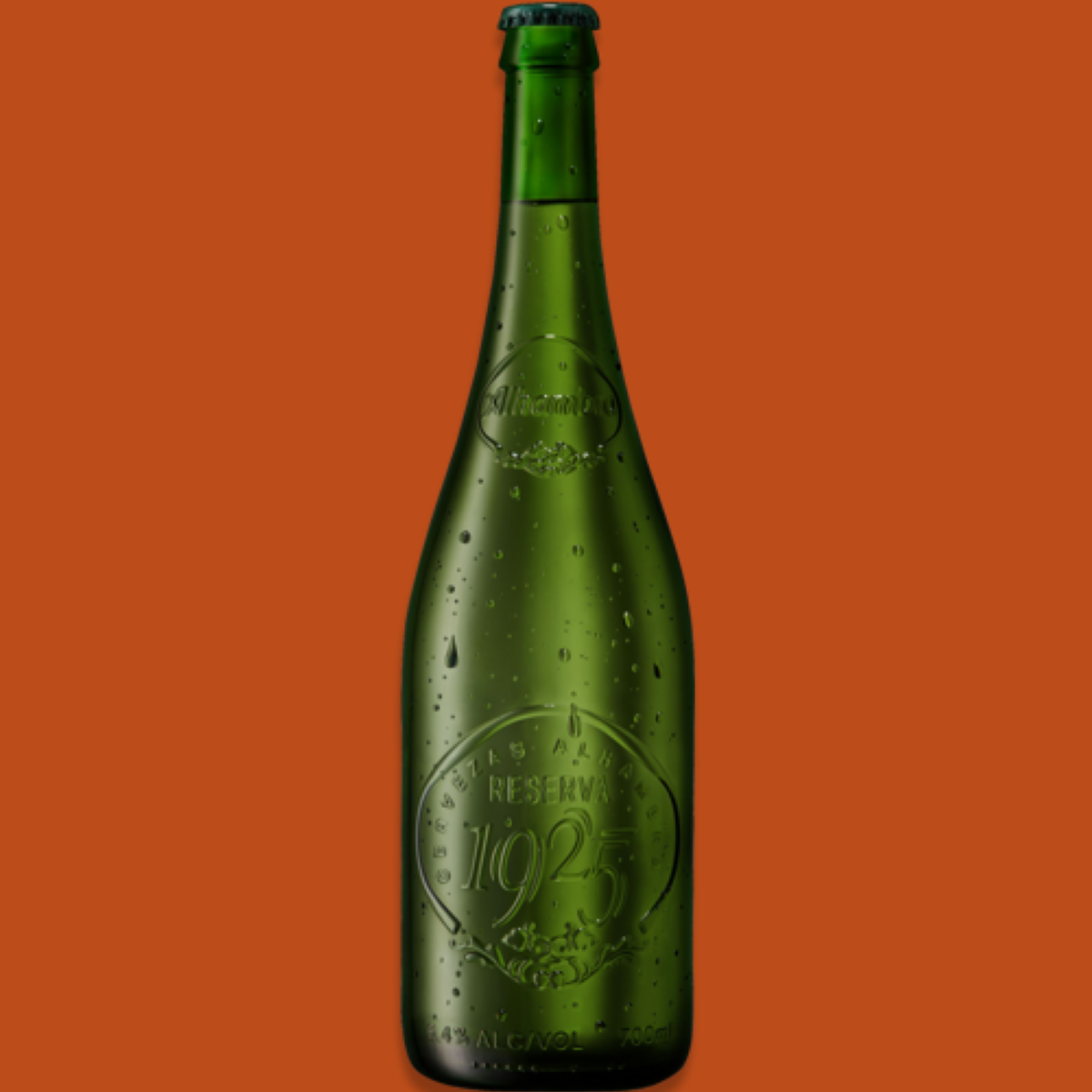
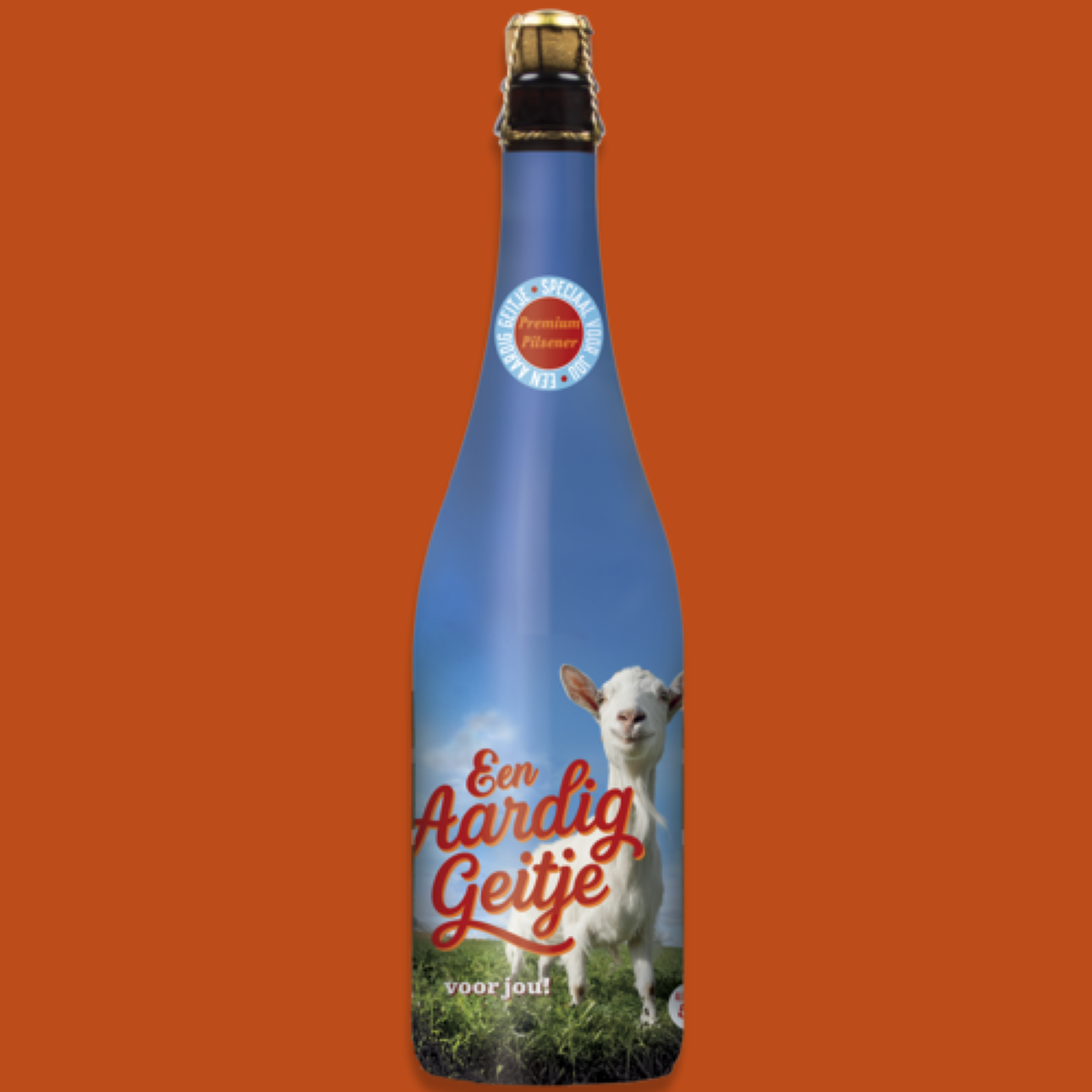
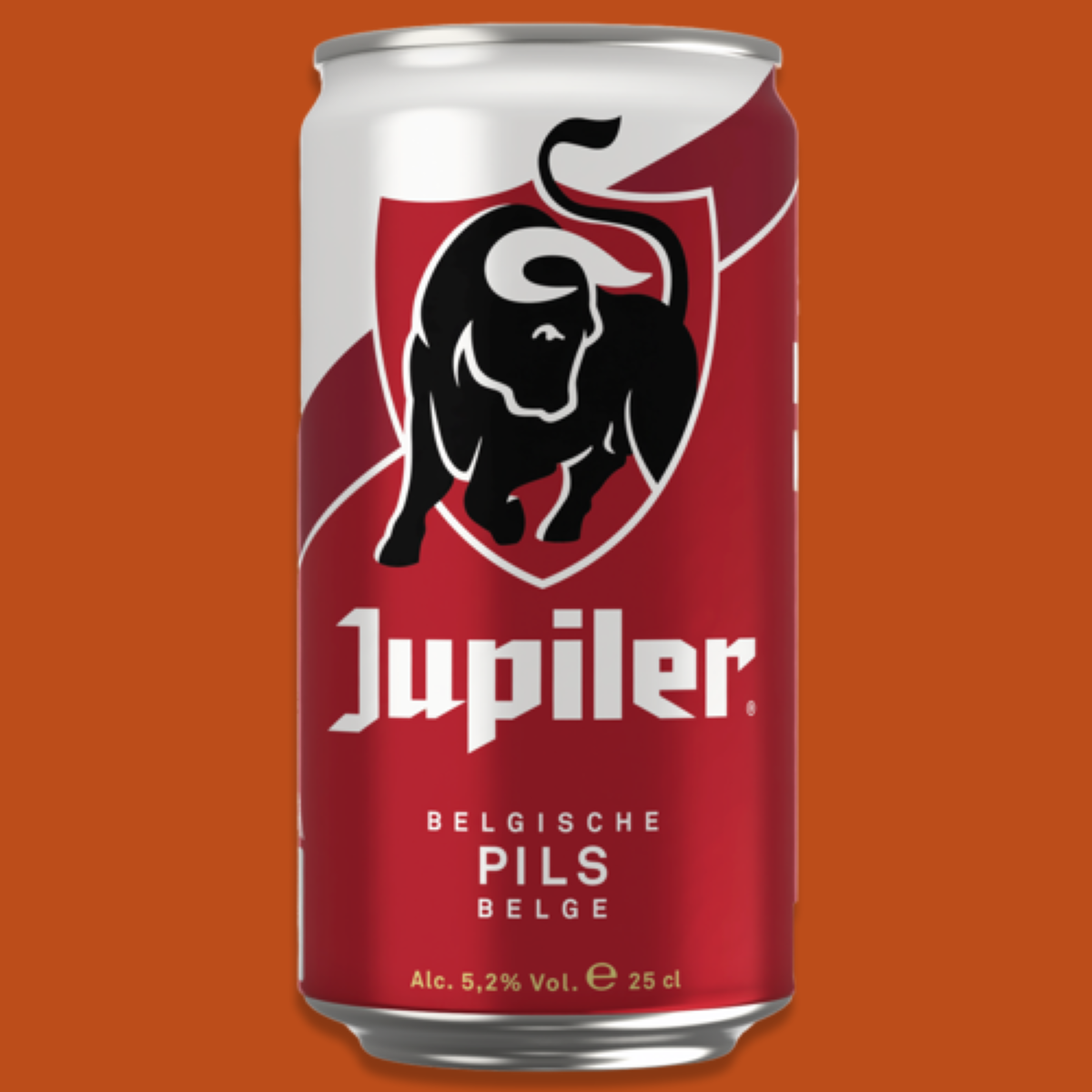
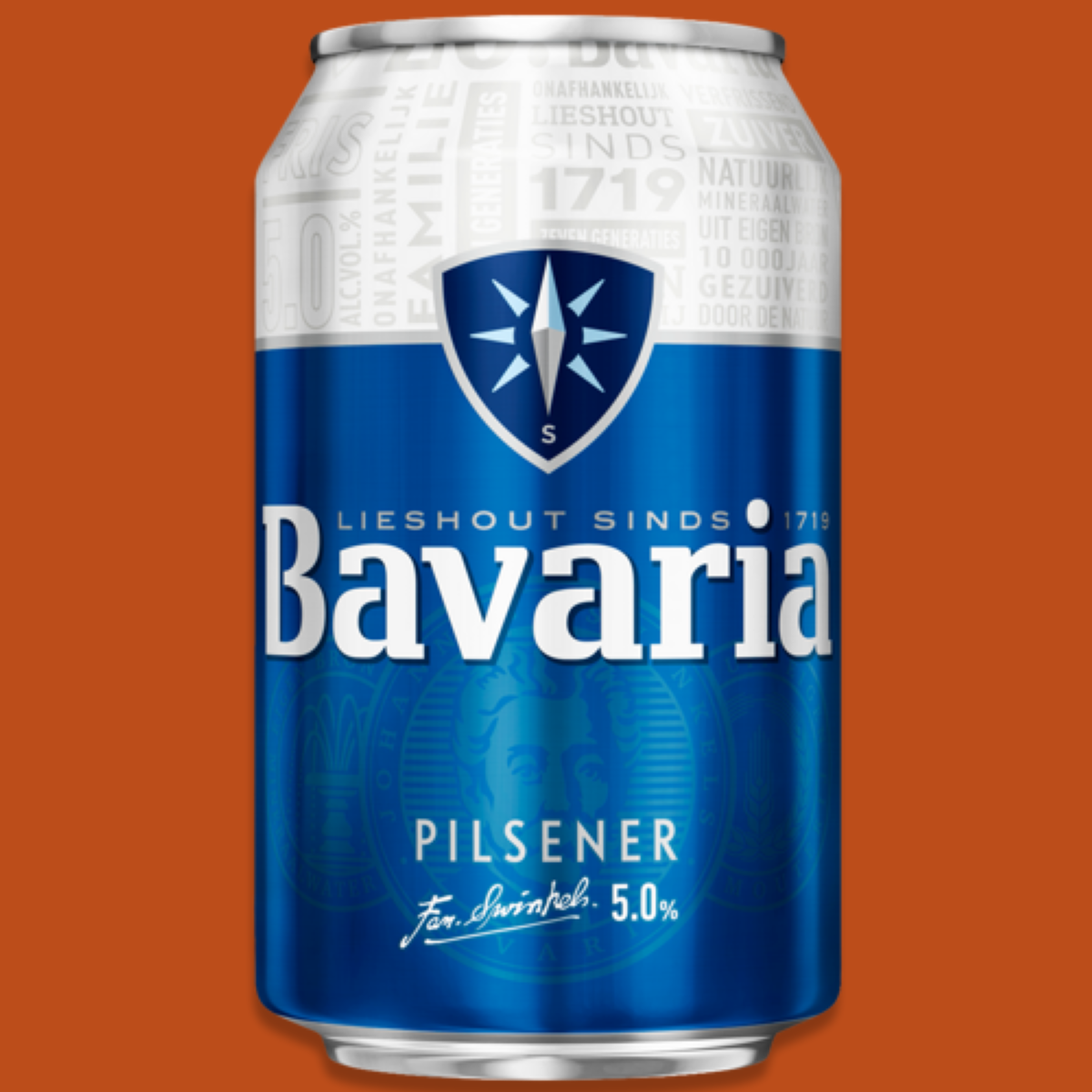
Prices as of November 21, 2026, as provided by Gall & Gall. You can see the current price and stock at Gall & Gall. Glazen.nl receives a small commission if you buy something through these links; it costs you nothing extra. No one under 18, no alcohol.
Everything for your bar,
to one address
Hospitality-quality glasses, sold in sets. Order today, delivered quickly.
Shop glasses →