


Glass breakage is one of the few cost items in the hospitality industry that you can almost entirely control yourself. In most businesses, it is not caused by one dramatic moment, but by a handful of habits that no one notices anymore. This is where the savings are.
1. Thermal shock is the biggest culprit
Glass rarely breaks from a knock. It breaks from a sudden change in temperature. A glass that has just come out of the dishwasher at 60 °C and is immediately filled with ice develops stress in the walls that can still lead to a crack weeks later.
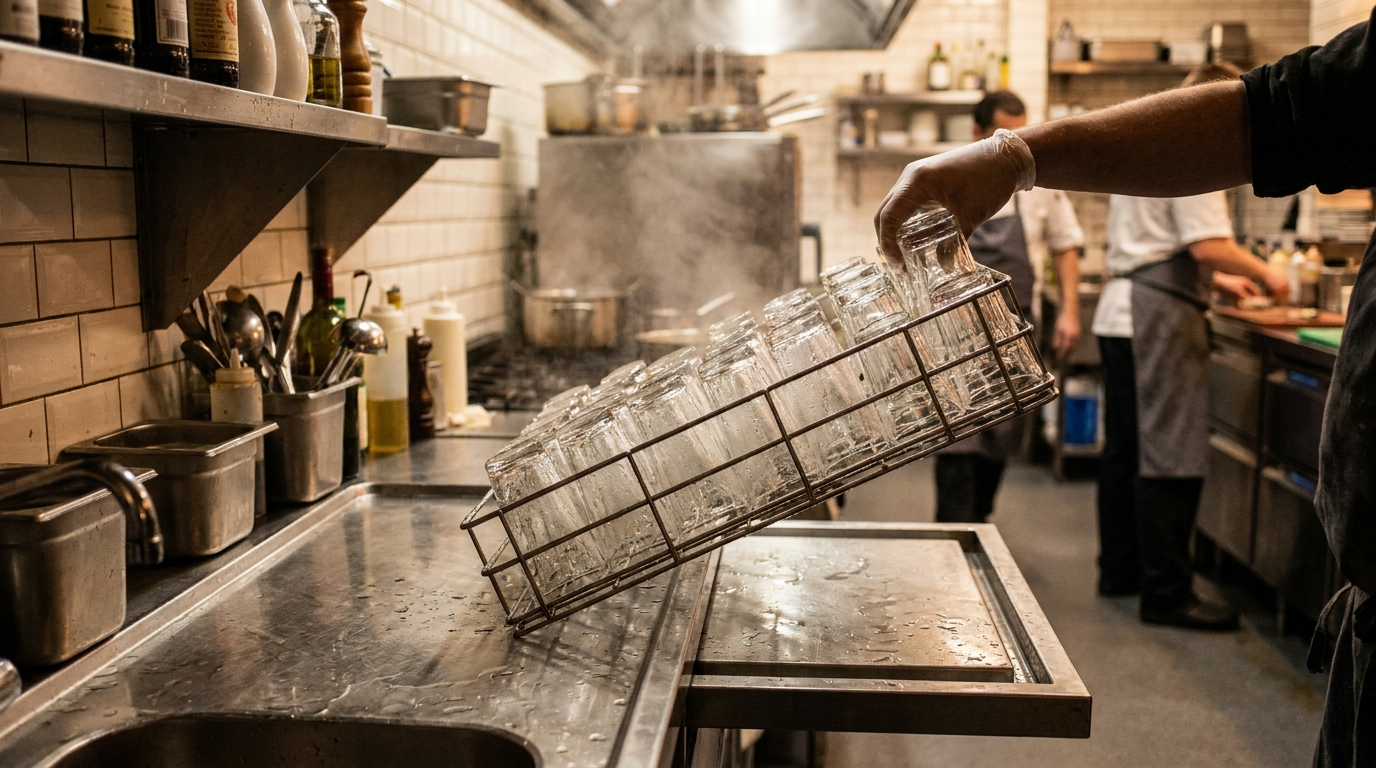
- After washing, let glasses steam-dry in the rack for at least ten to fifteen minutes before taking them to the bar.
- Keep a separate supply of chilled glasses on hand for peak periods.
- Never pour hot drinks into a glass that has just come out of the refrigerator — the same rule, in the other direction.
2. Use the right rack, and do not overfill it
Glasses that can knock against each other during the cycle become damaged along the rim. You may not see the damage, but it is the starting point for every later breakage.
- Use racks with dividers for stemmed glasses and open racks for tumblers.
- One glass per compartment. Do not force them in.
- Replace racks with broken prongs or sharp edges — they cost more in breakage than a new rack.
3. Do not stack what is not stackable
Stackable glasses are designed for it: they rest on a rim, not on each other’s inner walls. If you stack regular tumblers, they can become stuck and break when pulled apart. If you work with high volumes, deliberately choose a stackable model — such as the Bormioli Rocco Bodega, 35 cl, which is both stackable and dishwasher-safe and is therefore found on shelves in hospitality businesses across the country.
If two glasses do become stuck together: put cold water in the upper one and place the lower one in lukewarm water. Never pull them apart.
4. Water and dosing
Hard water and overdosing cause a loss of shine — that dull haze you can no longer remove with any program. It is not breakage, but it does lead to replacement.
- Make sure your water-softening system is working and check it regularly.
- Dose rinse aid according to the instructions, not more generously — in this case, more really is not better.
- Wash beer glasses separately from greasy items: protein and fat residue from kitchenware settles on glass and ruins the head of foam.
5. The bar station itself
A lot of breakage happens not in the dishwasher but at the bar, during busy periods, when someone is looking for something.
- Give each type of glass a fixed place and keep walking distances short.
- Place rubber mats where you put down and pour drinks.
- Keep the garnish station separate from the glassware — a bar caddy with fixed compartments for napkins, straws, and picks reduces searching at exactly the moments when things go wrong.
- Use a fixed “dirty rack” area so used glasses do not remain on the bar.
6. Never scoop ice with a glass
The classic mistake. A glass used as an ice scoop can chip, creating a shard you cannot see that may end up in your guest’s drink. That is no longer a breakage issue but a safety issue. Always use a metal or plastic scoop, and if in doubt, empty the entire ice bin.
What it delivers
Businesses that implement these points consistently generally reduce their breakage rate significantly — with the added benefit that the glassware that remains in use looks new for longer. Both are reflected in your purchasing costs.
Questions about which glassware suits your volume and dishwasher? Our business team will be happy to help via zakelijk@glazen.nl.

Leave a comment
This site is protected by hCaptcha and the hCaptcha Privacy Policy and Terms of Service apply.